
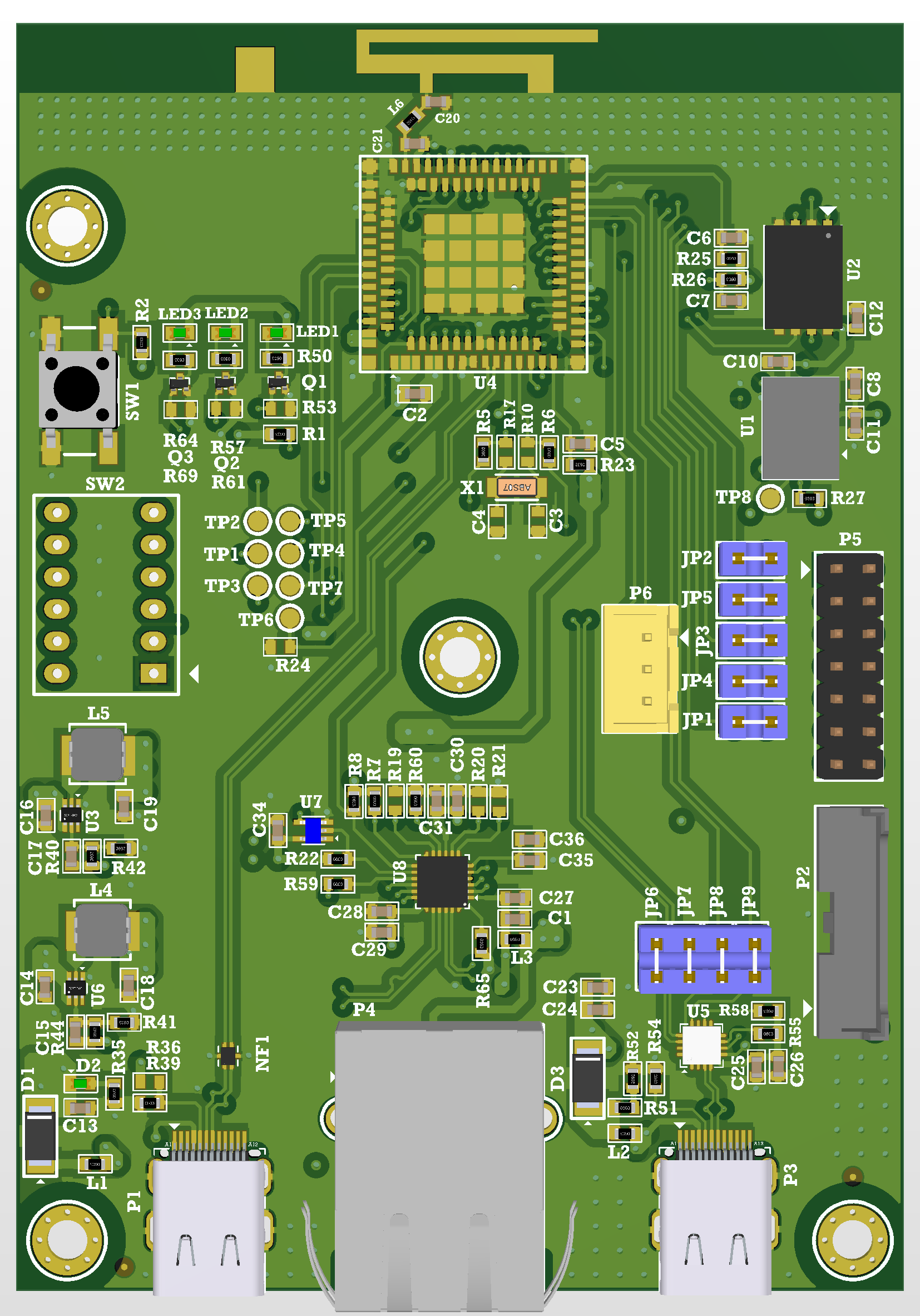
 3D Rendered Board
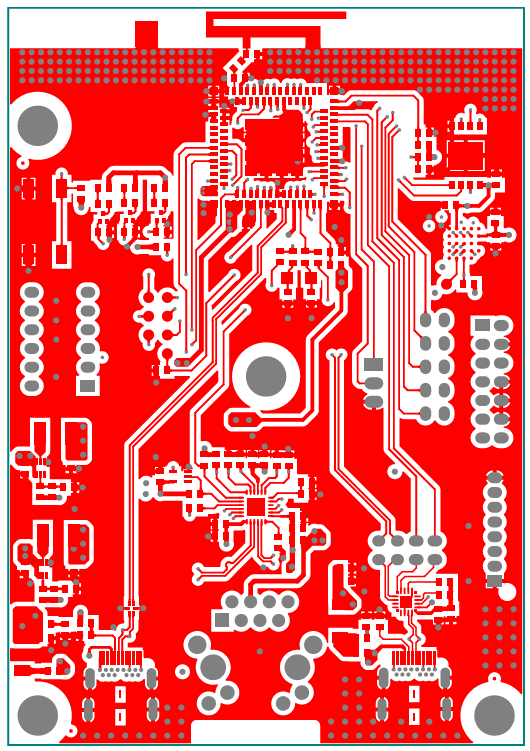 2D Design Layout
Slide to compare the 2D PCB design layout with the 3D rendered board.
Introduction
The IM100 is a compact wireless communication module designed to provide reliable connectivity and data exchange in embedded systems. In medical electronics, wireless communication plays a critical role in enabling real-time patient monitoring, remote diagnostics, device connectivity, and healthcare data management. The IM100 helps medical devices securely transmit data between sensors, embedded processors, monitoring stations, cloud platforms, and hospital information systems. Its low-power operation, robust wireless performance, and easy integration make it suitable for modern connected healthcare applications. By supporting wireless communication and interface functions, the IM100 contributes to the development of intelligent, portable, and network-enabled medical devices.
Key Features
- Reliable wireless communication capability
- Low-power operation for portable medical devices
- Secure data transmission
- Compact form factor for space-constrained designs
- High-speed data communication
- Easy integration with embedded processors and microcontrollers
- Support for real-time monitoring applications
- Robust connectivity in healthcare environments
- Flexible interface options for embedded systems
- Suitable for battery-powered medical equipment
- Scalable for connected healthcare solutions
- Supports remote monitoring and diagnostics
Why IM100 is Suitable for Medical Electronics
Modern medical devices increasingly require secure and reliable wireless communication to support patient monitoring, remote healthcare, and connected medical infrastructure. The IM100 enables seamless data transfer between medical sensors, embedded controllers, user interfaces, and cloud-based healthcare platforms. Its low-power architecture is well suited for portable and wearable medical devices, while its reliable connectivity helps ensure continuous transmission of critical patient information.
The module can be integrated into medical systems to support wireless monitoring, device configuration, data logging, firmware updates, and communication with hospital networks. Its compact design and simplified integration reduce development complexity while enabling flexible healthcare connectivity solutions.
The module can be integrated into medical systems to support wireless monitoring, device configuration, data logging, firmware updates, and communication with hospital networks. Its compact design and simplified integration reduce development complexity while enabling flexible healthcare connectivity solutions.
Applications
The IM100 is suitable for a wide range of medical electronics applications, including patient monitoring systems, ventilators, infusion pumps, wearable health monitors, portable diagnostic equipment, medical gateways, telemedicine platforms, remote patient monitoring devices, and smart healthcare systems. It enables secure communication between medical sensors, embedded processors, mobile applications, cloud servers, and hospital management systems.
Wireless connectivity provided by the IM100 allows healthcare professionals to access patient information remotely, monitor device status in real time, and improve operational efficiency. The module also supports connected healthcare ecosystems where multiple medical devices exchange information for centralized monitoring and data analysis.
At GVK POWER, we provide complete hardware development services involving IM100-based wireless communication solutions, including hardware architecture, schematic design, multilayer PCB development, embedded integration, communication interface design, testing, validation, and production support for medical electronic products.
Wireless connectivity provided by the IM100 allows healthcare professionals to access patient information remotely, monitor device status in real time, and improve operational efficiency. The module also supports connected healthcare ecosystems where multiple medical devices exchange information for centralized monitoring and data analysis.
At GVK POWER, we provide complete hardware development services involving IM100-based wireless communication solutions, including hardware architecture, schematic design, multilayer PCB development, embedded integration, communication interface design, testing, validation, and production support for medical electronic products.
Hardware Capabilities
The IM100 provides robust wireless communication capabilities that enable reliable data exchange between medical devices and external systems. It can interface with embedded processors and microcontrollers through standard communication interfaces, allowing seamless integration into medical sensor boards, control boards, and monitoring equipment. The module supports real-time data transmission, remote device management, firmware updates, and cloud connectivity. Its low-power operation, compact footprint, and stable wireless performance make it suitable for both portable and stationary medical systems requiring continuous communication and monitoring.
Benefits
- Enables wireless patient monitoring
- Supports remote healthcare applications
- Reduces wiring complexity within medical systems
- Low-power operation for portable devices
- Reliable real-time data communication
- Supports connected healthcare infrastructure
- Simplifies device-to-device communication
- Enables cloud-based medical data access
- Improves operational efficiency and monitoring
- Compact design for medical electronics integration
- Supports scalable healthcare solutions
- Enhances flexibility in medical device deployment
Design Considerations
When integrating the IM100 into medical electronics, designers should ensure proper RF layout practices, antenna placement, grounding, and shielding to achieve optimal wireless performance. PCB layouts should minimize interference from high-speed digital and power circuits. Power supply filtering, EMI/EMC considerations, signal integrity, and reliable communication interfaces should be incorporated to maintain stable operation. Thermal performance, component reliability, patient safety requirements, and manufacturability should also be evaluated during the design process to ensure dependable operation in healthcare environments.
RF Layout and Antenna Design: Optimize antenna placement, impedance matching, and RF routing for reliable wireless communication.
PCB Layout: Separate RF, analog, digital, and power circuits to minimize interference and maintain signal integrity.
Power Supply: Use low-noise power supplies with proper filtering and decoupling for stable operation.
EMI/EMC: Apply effective grounding, shielding, and filtering techniques to reduce electromagnetic interference.
Communication Interfaces: Ensure reliable data transfer between the IM100 and the host processor.
Thermal Management: Design for efficient heat dissipation to maintain long-term performance.
Component Selection: Choose high-quality, reliable components suitable for medical applications.
Safety and Reliability: Incorporate protection circuits and follow medical design practices for dependable operation.
Manufacturability: Optimize the design for efficient PCB fabrication, assembly, and testing.
Validation: Perform functional, RF, EMI/EMC, and reliability testing before production.
RF Layout and Antenna Design: Optimize antenna placement, impedance matching, and RF routing for reliable wireless communication.
PCB Layout: Separate RF, analog, digital, and power circuits to minimize interference and maintain signal integrity.
Power Supply: Use low-noise power supplies with proper filtering and decoupling for stable operation.
EMI/EMC: Apply effective grounding, shielding, and filtering techniques to reduce electromagnetic interference.
Communication Interfaces: Ensure reliable data transfer between the IM100 and the host processor.
Thermal Management: Design for efficient heat dissipation to maintain long-term performance.
Component Selection: Choose high-quality, reliable components suitable for medical applications.
Safety and Reliability: Incorporate protection circuits and follow medical design practices for dependable operation.
Manufacturability: Optimize the design for efficient PCB fabrication, assembly, and testing.
Validation: Perform functional, RF, EMI/EMC, and reliability testing before production.
Why Choose GVK POWER?
GVK POWER specializes in embedded hardware development for medical electronics, wireless communication systems, and connected healthcare devices. Our expertise includes hardware architecture, schematic design, multilayer PCB development, RF integration, embedded hardware design, prototype development, testing, and manufacturing support. We develop reliable and production-ready wireless communication solutions that help customers accelerate the development of modern medical devices. With extensive experience in embedded systems and healthcare electronics, GVK POWER delivers scalable hardware platforms tailored to the needs of connected medical applications.
Related Projects
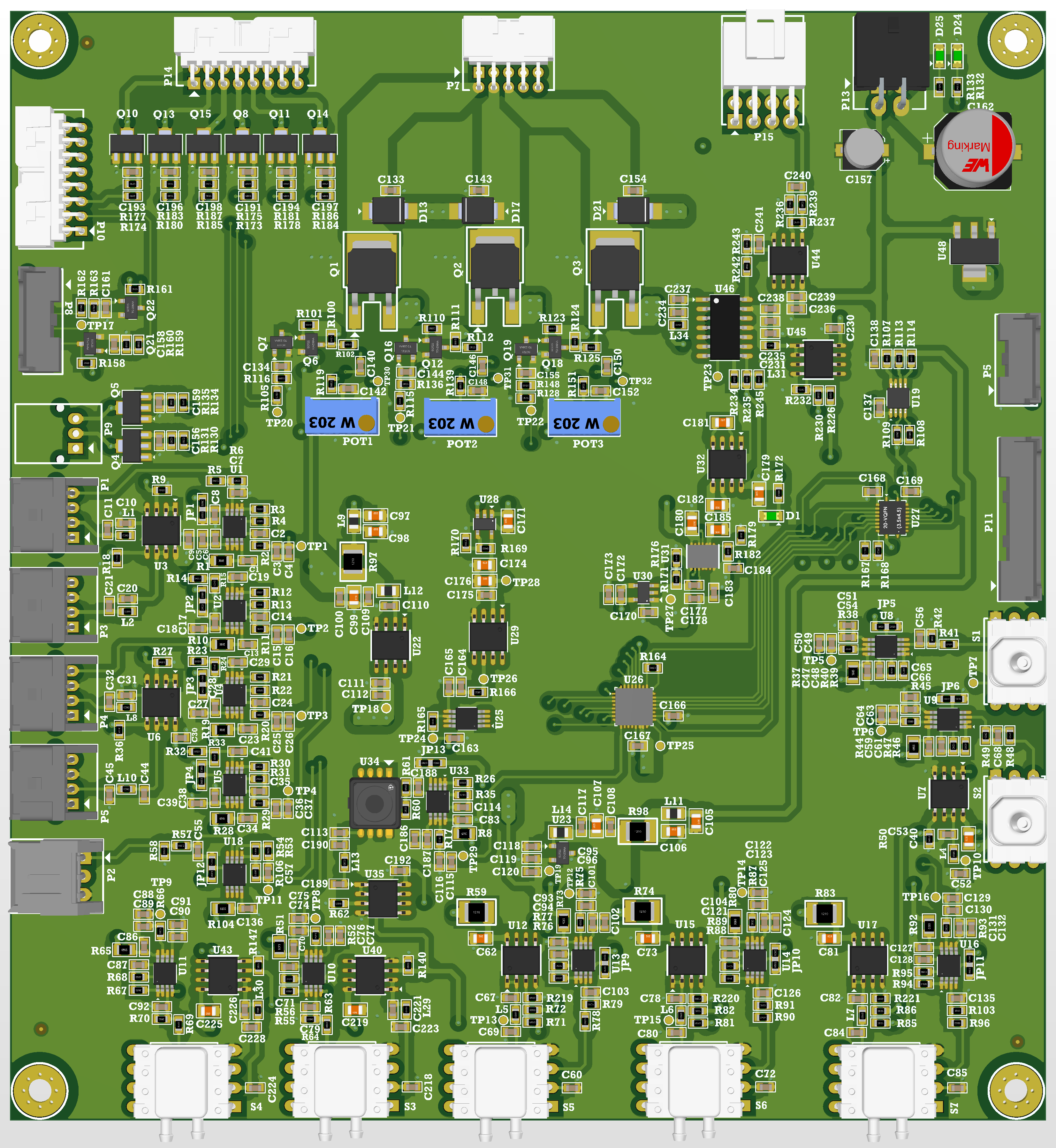 AD4696BCPZ
Medical Electronics
AD4696BCPZ
Medical Electronics
AD4696BCPZ for Medical Sensor and Driver Boards
The AD4696BCPZ is a high-precision, low-power, 16-bit Analog-to-Digital Converter (ADC) designed for applications requiring accurate and reliable signal acquisi...
View Case Study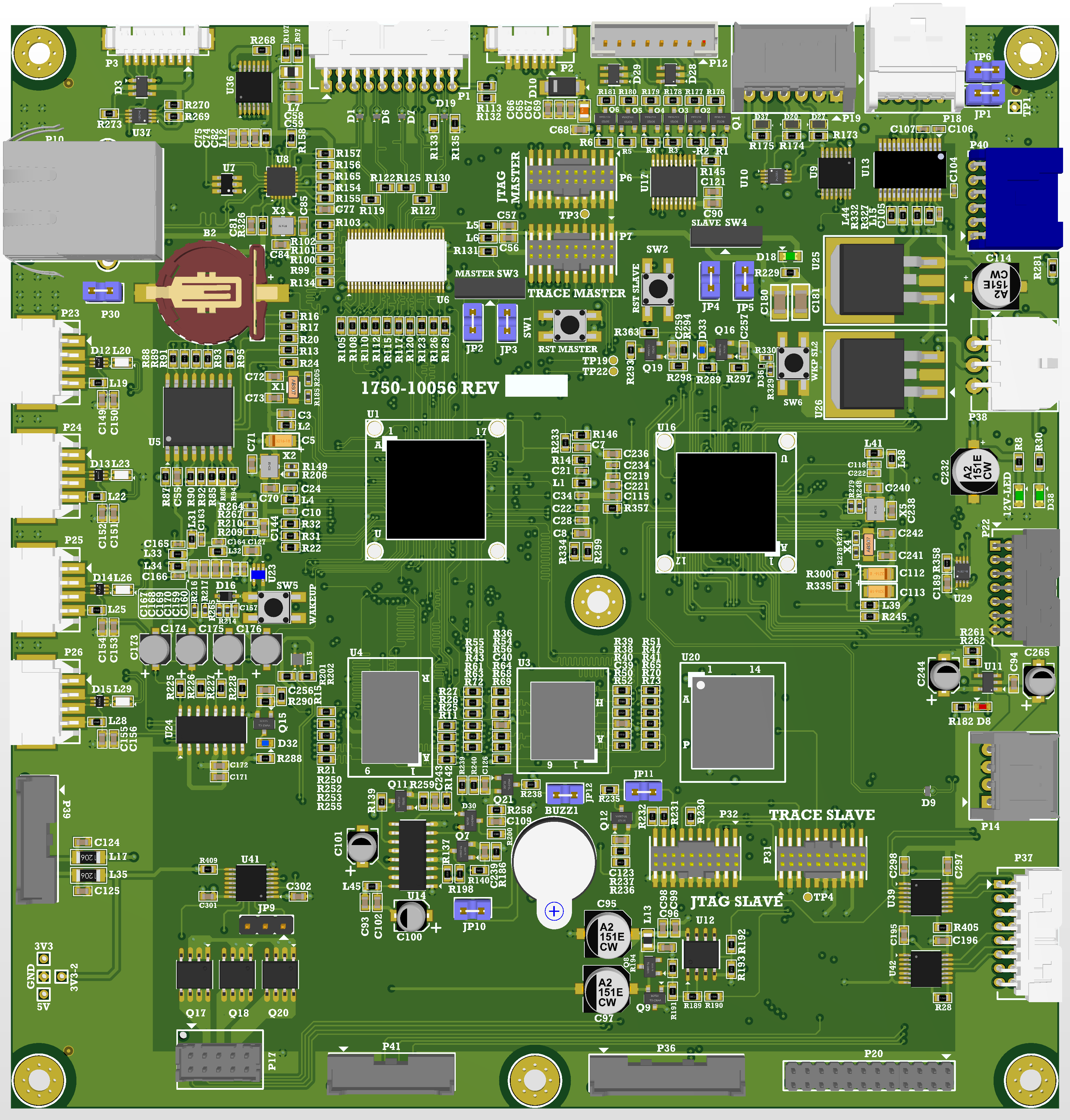 STM32H757
Medical Electronics
STM32H757
Medical Electronics
STM32H757 for Medical Electronics Motherboard
The STM32H757 is a high-performance dual-core microcontroller designed to meet the demanding requirements of modern medical electronics. Featuring a powerful Co...
View Case Study